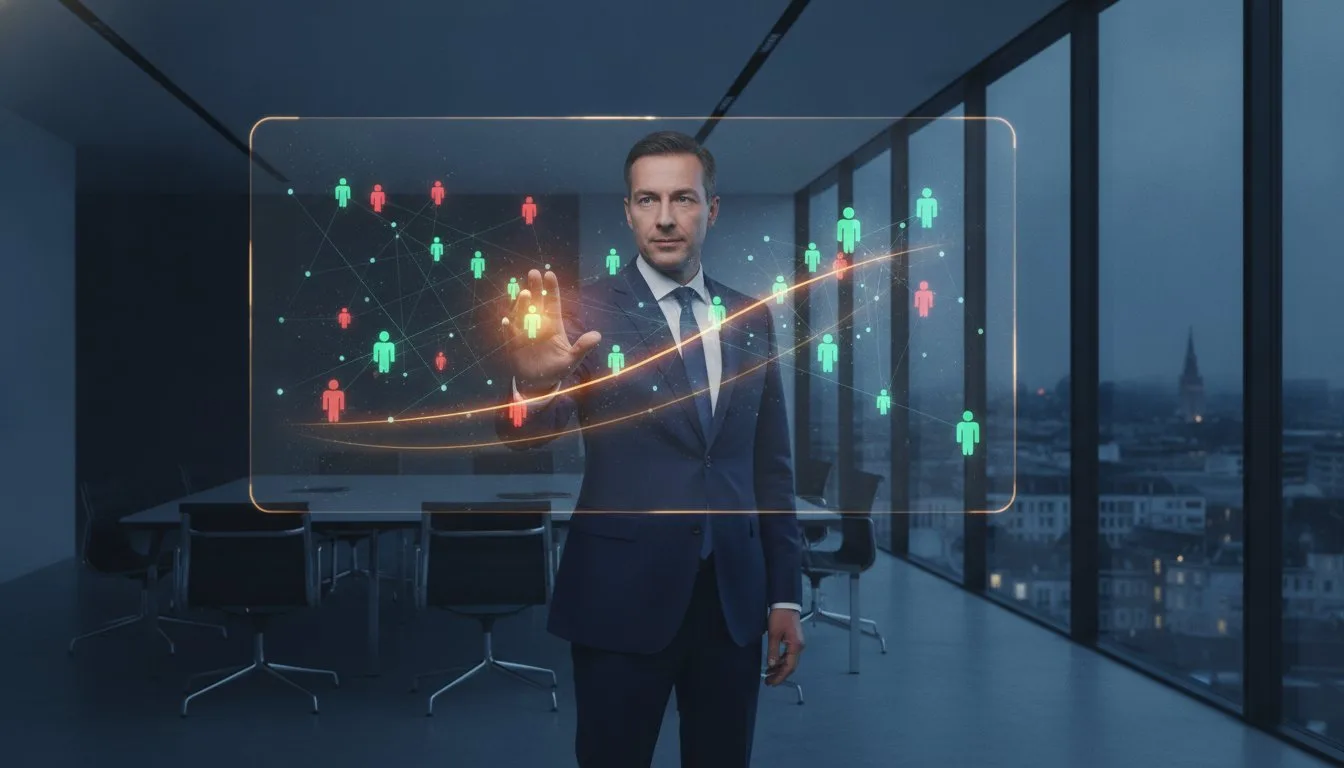
What if the first sign of an employee quitting wasn’t their resignation letter, but a data point you missed six months ago? Most leaders currently operate in a visibility gap. They miss rising burnout and hidden absenteeism until it’s too late to intervene. Relying on static annual surveys is no longer a viable strategy in a high-stakes market. To maintain a competitive edge, organizations are now turning to sophisticated employee engagement software in Belgium to transform silent signals into actionable workforce intelligence.
It’s exhausting to manage by gut feeling while navigating complex shifts like the EU AI Act or mandatory time tracking. You know that culture matters, but measuring its direct impact on ROI often feels like chasing a ghost. This guide promises to move you beyond surface-level metrics toward a strategy that predicts risks and accelerates performance. We’ll explore how to detect turnover threats early, clear the path for AI adoption, and build a resilient framework for leadership that prioritizes data over guesswork. The goal isn’t just to listen to your team; it’s to understand exactly what the data is telling you about the future of your business.
Key Takeaways
- Stop relying on static snapshots that hide turnover risks. Shift to a workforce intelligence model that turns raw data into predictive leadership action.
- Master the 2026 regulatory environment. Learn how to leverage employee engagement software in Belgium to ensure full compliance with the EU AI Act and evolving labor laws.
- Eliminate the surprise of high absenteeism. Identify leading indicators of burnout and disengagement to protect workforce wellbeing before it affects organizational performance.
- Measure what matters for the future. Use specialized assessments to evaluate team readiness for AI integration and organizational change; close the gap between strategy and execution.
- Build a data-backed roadmap for HR. Move from reactive guesswork to proactive strategy by setting clear priorities that align human behavior with business outcomes.
Table of Contents
- The Visibility Gap: Why Traditional Employee Engagement Fails in 2026
- Workforce Intelligence: The Leading Indicator for Business Sustainability
- Evaluating Employee Engagement Software for the Belgian Landscape
- From Pulse to Performance: A Roadmap for HR Leaders
- elli: The Workforce Intelligence Partner for Modern Leadership
The Visibility Gap: Why Traditional Employee Engagement Fails in 2026
Traditional methods are failing. Leaders are flying blind. They rely on annual snapshots to manage a workforce that changes by the hour. This creates a visibility gap. It’s the space between what you think is happening and the reality of your team’s intent. Industry observations suggest a high percentage of employees who resign were actually marked as “engaged” on their most recent annual review. The traditional concept of employee engagement has historically relied on looking backward. That is a fatal flaw. By the time a resignation lands on your desk, the opportunity to pivot is gone.
Implementing modern employee engagement software in Belgium is no longer just about culture. It’s about survival. It’s about moving from static data to dynamic workforce intelligence. In 2026, the cost of silence is too high. Undetected risks like burnout and disengagement erode business performance long before they show up on a P&L statement. Organizations must shift from measuring sentiment to measuring systemic drivers. You don’t just need to know how people feel; you need to know what’s driving those feelings and where the risks are concentrated.
The limits of the annual employee survey
Data decay is real. Feedback from six months ago is irrelevant in a rapid-change environment. If your strategy relies on last year’s data, you’re solving yesterday’s problems. Companies often complain about survey fatigue. This is a misunderstanding. Employees don’t resent surveys; they resent the lack of action. They hate seeing zero change after sharing their time. When participation rates drop, your strategic planning becomes skewed. You’re no longer seeing the whole picture; you’re only seeing the vocal minority. This lack of precision leads to wasted budgets and missed opportunities for intervention.
Defining the Visibility Gap in organizations
Executive perception rarely matches ground-level reality. An “average” engagement score of 75% sounds like success. It isn’t. It often hides a specific department at 40% where talent is hemorrhaging. These pockets of risk remain invisible without granular, real-time data. Hybrid work has further complicated this by removing the natural social signals leaders used to rely on. You can’t walk the floor to gauge morale when the floor is digital. Modern employee engagement software in Belgium bridges this gap. It provides the connectivity needed to detect risks in remote and hybrid teams. It replaces gut feeling with objective metrics, ensuring that leadership priorities are based on facts, not assumptions.
- Disconnect: Executives see the “what,” but teams live the “why.”
- Averages: Broad metrics mask localized crises.
- Hybrid signals: Digital-first environments require digital-first risk detection.
To lead effectively in 2026, you must close the gap. You need a system that identifies risk before it becomes a resignation. You need workforce intelligence that moves as fast as your business does.
Workforce Intelligence: The Leading Indicator for Business Sustainability
Workforce intelligence is the intersection where traditional surveys meet advanced risk analytics. It transforms human feedback into operational foresight. While standard tools report on the past, a workforce intelligence platform predicts the future. Old systems ask how people feel; modern intelligence tells you what they will do next. This shift is critical for maintaining a competitive edge in 2026. It moves HR from a reactive support function to a proactive strategic partner. You don’t just need more data. You need clarity on which data points actually drive business outcomes.
Leading indicators allow you to stop the bleed before the wound is visible. Most companies treat turnover as a lagging indicator; they analyze why someone left only after the exit interview. That’s a failure of strategy. According to OECD data on employee engagement, even regions with high engagement scores can harbor significant underlying risks. High surface scores often mask departments on the brink of collapse. Choosing the right employee engagement software in Belgium means selecting a tool that identifies these fractures before they hit the P&L. It provides the visibility required to protect your most valuable assets.
AI is the engine that converts raw sentiment into executive priorities. It processes thousands of open-ended responses to identify emerging trends instantly. It removes human bias from the analysis. This allows leaders to focus on execution rather than data mining. By implementing employee engagement software in Belgium, organizations can automate the identification of risk drivers, ensuring that interventions are targeted and effective. It’s about moving from guesswork to precision.
Retention and absenteeism analytics
Burnout isn’t a sudden event; it’s a slow burn of pulse signals that go ignored. Retention analytics pinpoint the source of friction. Is the problem a specific manager, a systemic workload issue, or a cultural misalignment? Identifying these “Drivers of Risk” allows for surgical intervention. When you quantify the financial impact of preventable turnover, you change the conversation. HR finally speaks the language of the C-suite. Data becomes the bridge between human wellbeing and financial sustainability.
Change and AI readiness assessments
Digital transformation fails because of people, not technology. Change fatigue is the silent killer of productivity in the modern workplace. Measuring AI readiness is now a baseline requirement for any major shift. You must distinguish between a lack of digital literacy and genuine anxiety about job security. A resilient workforce views change as an opportunity. This resilience is built on transparency and data-driven support. Leaders are discovering that a workforce intelligence platform provides the clarity needed to act before change-related risks escalate into systemic failure.
Evaluating Employee Engagement Software for the Belgian Landscape
Choosing employee engagement software in Belgium requires more than a standard feature checklist. It demands a strategic alignment with complex legal frameworks and a fragmented workforce structure. Generic global tools often fail here. They ignore the nuances of local social dialogue and the necessity of linguistic precision. You need a platform that functions as a strategic partner. It must bridge the gap between raw data and compliant executive action.
GDPR is the baseline. By 2026, the regulatory landscape has shifted significantly. The EU AI Act now mandates full transparency and bias mitigation for HR tools used in performance evaluation. Non-compliance is a major financial risk. Fines can reach €35 million or 7% of global turnover. Your employee engagement software in Belgium must be built on a foundation of legal resilience. It’s not just about privacy; it’s about algorithmic accountability. It ensures your data-driven transformations remain on the right side of the law.
Linguistic diversity is a strategic hurdle, not a minor detail. A fragmented workforce is a silent one. In a multilingual environment, language shouldn’t be a barrier to engagement. The platform must provide seamless, native experiences in Dutch, French, German, and English. This ensures every voice is captured with equal clarity and sentiment is analyzed without translation bias. When everyone can participate in their own language, data quality improves. Strategic planning becomes more inclusive and accurate.
Data silos are the enemy of intelligence. Your engagement tool must communicate directly with your existing HRIS. This connectivity allows you to correlate employee sentiment with hard metrics like turnover or performance. Scalability is equally vital. Whether you manage 50 or 5,000 employees, the system must maintain its analytical depth. It should grow with your organization, providing consistent insights as you expand from local teams to large-scale enterprises.
GDPR and data privacy in 2026
Trust is the currency of feedback. If employees fear identification, they will withhold the truth. You must balance anonymity with the need for actionable team-level insights. Local data hosting remains a priority for many organizations. It’s about security and sovereignty. Additionally, the software should facilitate social dialogue. It provides the objective data needed for transparent discussions with works councils and labor representatives. This evidence-based approach reduces friction during organizational change.
Hybrid work and the ‘Digital Employee Experience’
Visibility shouldn’t depend on physical presence. Hybrid models have created a distance that natural social signals cannot bridge. Accessibility is key. Frontline workers deserve the same visibility as office-based staff. “Flow of work” integrations are the solution. Gathering feedback through Teams or Slack reduces friction and increases participation. It embeds engagement into the daily routine. This creates a continuous loop of intelligence that supports decentralized teams and ensures no one is left behind.
From Pulse to Performance: A Roadmap for HR Leaders
Execution is the differentiator. Having data is a start; using it is a strategy. To transition from raw sentiment to organizational performance, HR leaders need a structured roadmap. It begins with a baseline assessment. You must identify your current risk profile before deploying solutions. Are your teams suffering from change fatigue, or is there a specific digital literacy gap? In 2026, measuring AI anxiety is as critical as measuring job satisfaction. Knowing your starting point ensures your interventions are surgical rather than speculative.
The next phase is defining a frequency strategy. Annual reviews are obsolete. However, “always-on” doesn’t mean “constant.” The right pulse depends on your industry and pace of change. High-growth tech firms require weekly signals; manufacturing might need monthly checkpoints. Implementing the right employee engagement software in Belgium allows you to automate these rhythms. It ensures you capture data at the speed of your business without overwhelming your staff. This consistency builds the foundation for continuous feedback loops where analysis leads directly to real-time action.
Empowering managers with actionable insights
Engagement is a team-level sport. It fails when it’s treated as an HR-only initiative. Team leaders are the primary drivers of culture and retention. They need the tools to own their results. Modern platforms provide “Nudge” analytics. These are bite-sized, data-backed suggestions that help managers address risks before they escalate into resignations. Automated reporting reduces the administrative burden on leaders. It allows them to focus on people, not spreadsheets. When managers have clarity, they lead with confidence. This decentralized approach ensures that problems are solved where they start.
Measuring the ROI of engagement initiatives
The boardroom demands metrics. You must link engagement scores to hard business outcomes. Correlate your data with absenteeism rates and productivity targets. The ROI of clarity is measurable. Think about the financial impact of preventing a single instance of executive burnout or reducing turnover in a critical department by 5%. Data-backed insights allow you to quantify the cost of inaction. This evidence justifies your HR budget. It transforms HR from a cost center into a strategic value driver. By using a sophisticated workforce intelligence platform, you can demonstrate exactly how human capital strategy fuels the bottom line.
elli: The Workforce Intelligence Partner for Modern Leadership
Intelligence is the antidote to uncertainty. Most tools stop at data collection. elli begins with strategic insight. It doesn’t just ask questions; it surfaces the systemic drivers behind the numbers. By bridging the Visibility Gap, elli transforms silent risks into visible leadership priorities. This is the evolution of employee engagement software in Belgium. It moves your organization beyond surface-level sentiment toward a data-driven strategy that predicts turnover and accelerates performance. Reactive management is a liability. Proactive leadership is the goal.
The platform provides a suite of integrated assessments. You get a single view of retention analytics, wellbeing metrics, and change readiness. You don’t need multiple vendors to understand your people. elli identifies the specific drivers of risk across teams and individuals. If a department is struggling with AI integration, the data points to the exact friction point. Is it a lack of digital literacy or high change fatigue? You have the answer before the next quarterly review. Organizations trust this approach because it replaces gut feeling with objective, actionable outcomes.
A platform built for strategic authority
Executive decision-making requires precision. elli delivers analytics that cut through the noise of raw data. It’s designed for clarity. The interface is built to keep participation high across every level of the company. When employees feel heard, they engage. When leaders have data, they act. This continuous loop of feedback and action keeps your business ahead of 2026 workforce trends. It’s not just about tracking metrics; it’s about fostering a resilient, high-performance culture that views change as a competitive advantage.
Get started with elli
Your 2026 strategy is only as strong as your workforce intelligence. Don’t let hidden risks undermine your digital transformation or retention goals. Integrating employee engagement software in Belgium into your existing HR ecosystem is the final step toward total organizational visibility. See your potential gaps in real-time with a personalized demo. It’s time to move from analysis to action. Discover how elli transforms your workforce data into strategic action and secure the future of your leadership. Stop guessing. Start knowing.
Mastering Workforce Intelligence in 2026
The visibility gap is no longer an acceptable operational risk. Modern leadership requires more than just feedback; it requires predictive foresight. By shifting from static surveys to a dynamic workforce intelligence strategy, you replace guesswork with precision. You gain the definitive ability to detect burnout and turnover risks before they impact your P&L. Specialized AI readiness assessments ensure your digital transformations are backed by human capability rather than hindered by silent anxiety.
Implementing sophisticated employee engagement software in Belgium is about more than just legal compliance. It’s about establishing a foundation of strategic authority. With actionable risk analytics and deep workforce expertise, you can finally align team wellbeing with organizational performance. The tools for total clarity are within reach. It’s time to move from reactive anxiety to proactive leadership. You have the vision to lead; now you have the data to match it.
Book your workforce intelligence demo today
and transform your raw data into a sustainable competitive advantage. Your path to organizational clarity starts here.
Frequently Asked Questions
What is the difference between an engagement survey and a workforce intelligence platform?
Engagement surveys capture a static snapshot of employee sentiment at a single point in time. In contrast, a workforce intelligence platform integrates those surveys with advanced risk analytics to predict future behaviors like turnover or burnout. It moves beyond reporting what happened to explaining why it is happening and what will occur next. Intelligence platforms serve as leading indicators for business sustainability.
How often should we survey our employees in 2026?
The ideal frequency depends on your organization’s pace of change, but the trend has moved toward continuous pulse signals. Annual reviews are too slow for the modern market. Many high-performance companies now pulse bi-weekly or monthly to capture data at the speed of their business. This ensures that leadership can identify and address emerging risks before they escalate into systemic failures.
Is employee engagement software GDPR compliant for companies in Europe?
Yes, but compliance in 2026 must go beyond basic GDPR to include the transparency requirements of the EU AI Act. Modern employee engagement software in Belgium must ensure full anonymity while providing actionable team-level insights. It functions as a legally resilient framework that protects employee privacy and mitigates algorithmic bias. Trust is the foundation of data quality; compliance is how you maintain it.
Can elli help us measure AI anxiety and digital readiness?
elli provides specialized assessments specifically designed to quantify AI anxiety and digital literacy. These metrics allow leaders to distinguish between a technical skill gap and psychological resistance to new technology. By measuring these drivers early, you can tailor your digital transformation strategy to address specific fears. This proactive approach ensures that your technological investments aren’t undermined by a workforce that feels unprepared or threatened.
How do we ensure high participation rates for our internal surveys?
High participation is driven by a visible “feedback-to-action” loop. Employees stop responding when they feel their input leads to zero change. You must demonstrate that data results in tangible leadership pivots. Additionally, integrating surveys into daily tools like Teams or Slack reduces friction. When providing feedback is effortless and results in clear improvements, participation rates naturally increase across all levels of the organization.
What are the most important workforce risk metrics to track?
Prioritize leading indicators such as turnover intent, burnout signals, and change fatigue scores. While lagging metrics like absenteeism are important for reporting, they only show damage that has already occurred. Implementing employee engagement software in Belgium allows you to identify departments at risk of talent loss before resignations are submitted. Monitoring manager-level sentiment is also critical, as localized leadership is often the primary driver of broader organizational risk.
How long does it take to implement elli in a mid-sized organization?
Implementation typically takes between four and eight weeks, depending on the complexity of your existing HRIS integrations. The process is designed to be streamlined and efficient, moving quickly from technical configuration to the delivery of initial workforce insights. We prioritize alignment with your strategic goals from day one. This ensures that your leadership team begins receiving actionable data as soon as the first pulse is completed.
Does the platform support French, Dutch, and English for multilingual teams?
The platform provides full native support for French, Dutch, and English to ensure every employee can provide feedback in their preferred language. Linguistic precision is essential for accurate sentiment analysis. When employees can express themselves naturally, the data is more nuanced and reliable. This multilingual capability eliminates communication barriers and ensures that your workforce intelligence reflects the true voice of your entire organization.